7 Practical Tips for Cooling Server Rooms During HVAC Emergencies
Posted on
Home › Blog › 7 Practical Tips for Cooling Server Rooms During HVAC Emergencies
Server Room Cooling Tips for Small & Mid-Sized Businesses
1. Have a Cooling Plan Before You Need It
For many small and mid-sized businesses, server rooms support everything from internet access and phone systems to critical daily operations. If an HVAC system fails, temperatures can rise quickly and put essential equipment at risk. Having a temporary cooling strategy in place ahead of time can reduce downtime, prevent emergency scrambling, and help keep operations running smoothly.
2. Act Quickly When Temperatures Start Rising
Even short periods of excessive heat can create problems for servers and networking equipment. High temperatures may lead to:
Server shutdowns
Hardware failures
Network interruptions
Reduced equipment lifespan
Potential data loss
Costly operational downtime
The sooner cooling is restored, the lower the risk to your systems and infrastructure.
3. Use Temporary Cooling for Fast Relief
Many server room cooling projects are temporary by nature. A failed compressor or HVAC breakdown during the summer can leave businesses in need of immediate cooling support while permanent repairs are completed.
Temporary cooling solutions, including portable air conditioners and spot coolers, can provide fast relief for:
Emergency HVAC failures
Broken compressors
Unexpected cooling outages
Seasonal cooling overloads
Supplemental cooling during maintenance or upgrades
Portable units can often be deployed quickly without major building modifications.
4. Evaluate Access Points Before an Emergency Happens
One of the biggest challenges with server room cooling is simply getting equipment into the space. Many server rooms are intentionally built in interior areas away from windows, which can make access more difficult during an emergency.
Before cooling equipment is needed, consider:
Doorway widths
Hallway clearance
Elevator access
Tight corners or stairwells
Space around server racks
Planning ahead can significantly reduce setup time during an urgent situation.
5. Don’t Overlook Equipment Size Requirements
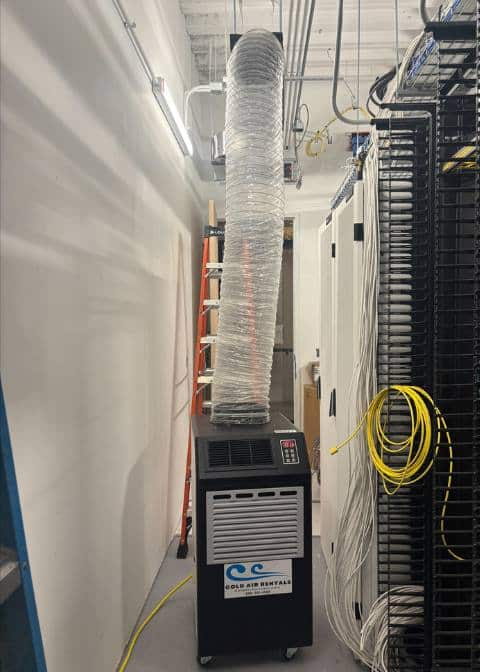
Cooling equipment may be portable, but it still requires room for setup and operation. Larger temporary units often fit through standard commercial doorways, but navigating tight spaces and properly positioning equipment can still be challenging.
Understanding space limitations in advance helps ensure the right cooling solution can be installed quickly and effectively.
6. Plan for Proper Airflow & Exhaust
Temporary cooling equipment still needs a means of removing warm air from the room. Without proper ventilation, cooling performance can suffer, leading to uneven temperatures.
Consider:
Exhaust duct routing
Nearby ventilation paths
Airflow direction around server racks
Preventing hot air recirculation
Keeping airflow pathways clear
Proper airflow management helps reduce hotspots and improve cooling efficiency.
7. Make Sure Adequate Power Is Available
Portable cooling systems require dedicated power sources, and many server rooms are already operating near electrical capacity.
Before bringing in temporary equipment, verify:
Available circuits
Voltage requirements
Breaker capacity
Safe cable routing
Backup power availability
Addressing power needs in advance can help avoid delays during installation.
Keep Critical Systems Running During Cooling Emergencies
When a server room loses cooling, every minute matters. Temporary cooling solutions can help businesses protect equipment, maintain operations, and buy valuable time while permanent HVAC repairs are completed. With preparation and the right emergency cooling strategy, businesses can reduce the risk of downtime and keep critical systems online.
Cold Air Rentals provides temporary cooling solutions for server rooms and small data centers, whether you’re planning ahead for potential HVAC issues or need emergency cooling support after an unexpected system failure. Their team can help businesses quickly deploy portable cooling equipment to keep critical systems protected and operational.
I cannot say enough good things about the team at Cold Air Rentals. I worked with Lisa and Ryan. Let me just say, as a vendor myself, I truly appreciate the attention to detail, communication, and level of service we received from them. They absolutely went above and beyond to help us out of a tight spot with our client for a live broadcast production. I would recommend Cold Air Rentals to anyone and everyone I know! Thanks again Lisa and Ryan! Y'all will be hearing from us next time we are in Charlotte!
Zach and Reese were friendly, efficient, and professional. We’ve used CAR several times and it’s been a good experience every time. If you can’t go to them, ask about delivery fees. Makes it very convenient!
Cold Air Rentals is our go to! Reece who works with them delivered fans to a wedding we had this passed weekend and was so friendly, flexible, and a hard worker. We look forward to working with there team again soon.
The heaters that we rented were perfect for my company’s needs. The man who delivered and picked them up was very nice and efficient with his job. I highly recommend this company.
We rented a 30-ton unit, and the service was excellent. Fast delivery, smooth setup, and the equipment worked perfectly. Great pricing and customer service from start to finish.
We used Cold Air Rentals to cool our warehouse, and they were awesome to work with. Super quick setup, great customer service, and everything worked perfectly. Plus, they had the best price we found anywhere. Would definitely use them again!
I’ve had to use Cold Air Rentals twice now for some QSR’s I oversee and both times they have been right on point!!! Not only is the staff wonderful but they respond quickly. Both times the equipment was dispatched and set up that day!!! And that’s important for me. I now know when I need them in a pinch they will be there to help with my cooling needs. Customers don’t want to eat in a hot restaurant. Thank you CAR!!!