

How Does Cold Weather Impact a Construction Site?
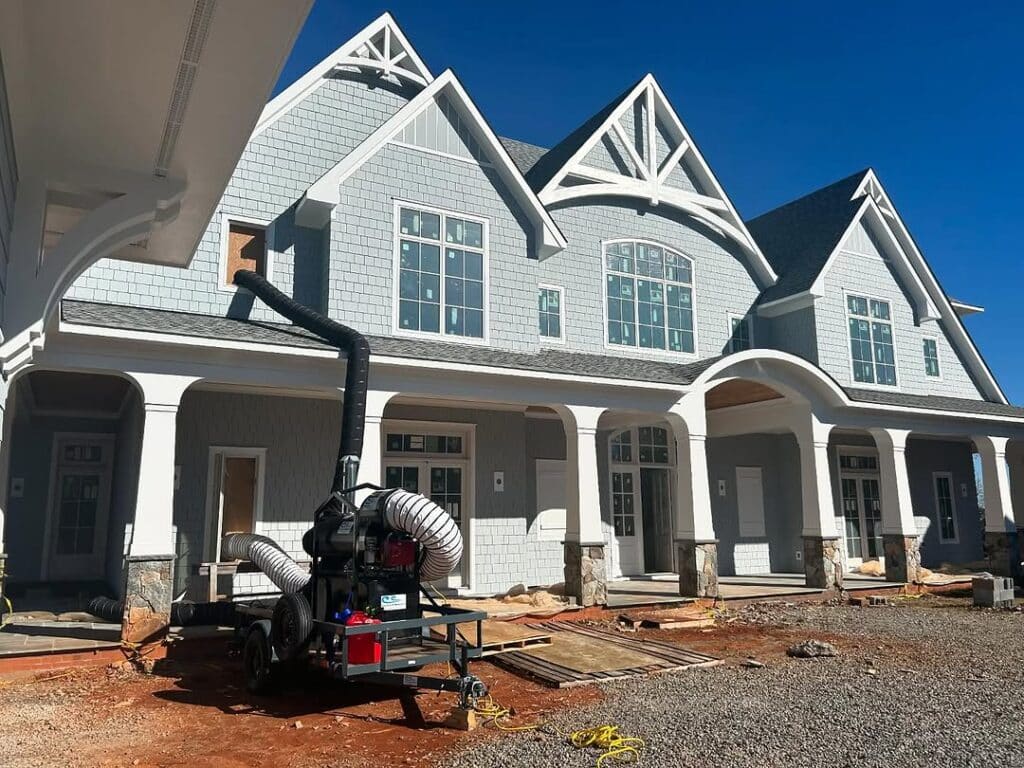
Winter construction brings unique challenges. Low temperatures can slow productivity and create safety risks for workers.
To keep your project running efficiently and safely, it’s essential to heat the job site correctly. For more information about the options we have available, visit our temporary heaters page.
Cold Weather Weakens Concrete as it Sets
As concrete cures, a chemical reaction converts it from a fluid mix into a solid mass. Temperature has a major effect on the pace of this reaction: warmer conditions speed curing, while colder conditions slow it. For a strong, long-lasting surface, concrete should cure as quickly and consistently as possible; therefore, it must be protected against low temperatures that slow the curing process.
Protecting fresh concrete from freezing is critical. If it freezes before it gains sufficient strength, internal damage from ice expansion can permanently weaken the structure. Concrete must reach enough early strength to withstand the pressure of freezing water.
Drywall Can Fail in the Cold
If you attempt to use spackle or joint compound on drywall in temperatures below 60°F, you will find that it becomes brittle and fails to adhere properly to the wall. You’ll also run into trouble when it comes time to paint the wall. Because cold temperatures slow evaporation, the colder the environment, the longer paint takes to dry. Once you factor in the drying times between coats, this can really add to your total project time and take away from your productivity.
Cold also alters the paint’s chemistry. As it cools, paint thickens and becomes difficult to apply evenly.
Cold Conditions Can Cause Health Problems
OSHA warns that construction workers exposed to cold weather face increased risk of conditions such as frostbite and hypothermia. These conditions occur when blood leaves the extremities to protect internal organs and when the body loses heat faster than it can replace it. The danger rises as temperatures fall and is worsened by wet or damp conditions.
Construction Heater Rentals
Sometimes, construction drying can become a burden on sites where there is extra moisture in the air. Excess moisture at a construction site can slow progress, increase the risk of mold, and compromise the structural integrity. While construction heaters manage temperature, renting a dehumidifier helps control humidity, keeping your project on schedule.
If you need heat in several separate areas of your job site, consider using industrial fans to direct warmth where it’s needed. Renting fans might seem odd in colder months, but they let you concentrate heat on specific spots for better temperature control.
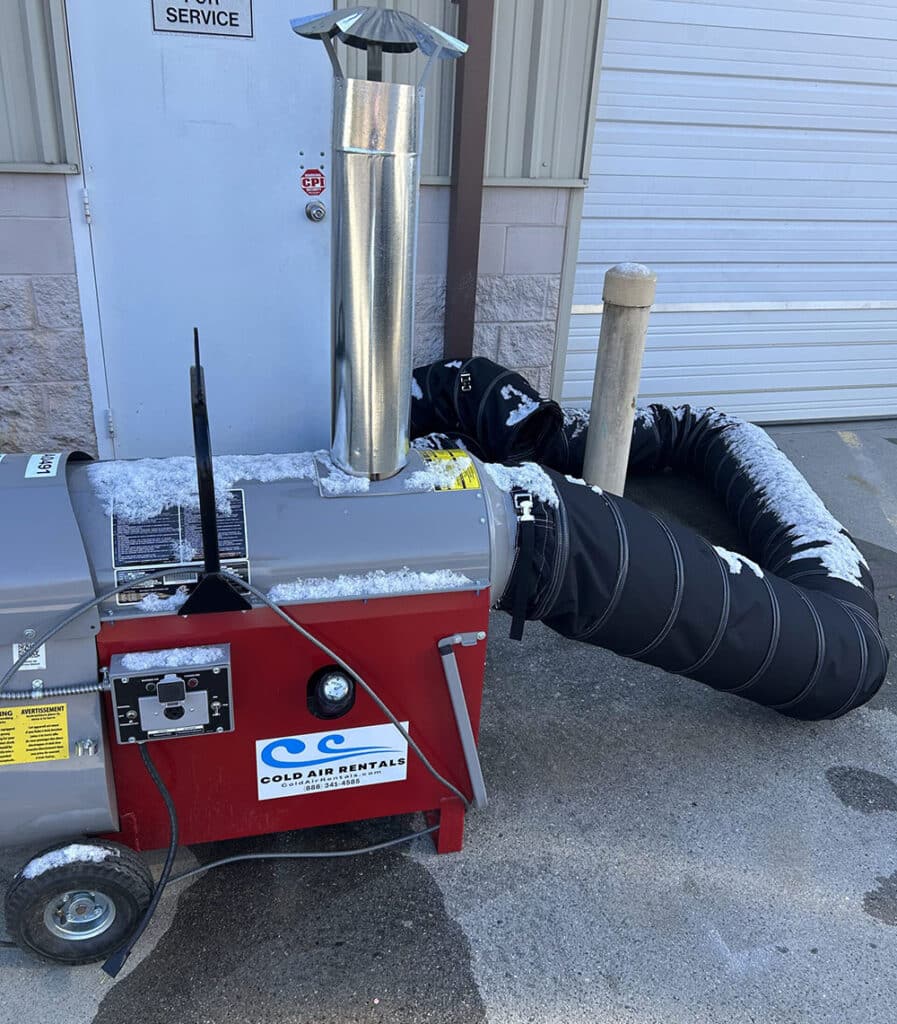
If your site is enclosed and sees a lot of foot traffic throughout the day, an indirect-fired heater may be the right type of heater rental for you. Indirect-fired heaters utilize propane, diesel fuel, or natural gas to warm a heat exchanger, thereby increasing the air temperature in a space. Generally, indirect-fired heaters are installed outside and pump air into a room through attached ductwork.
Not sure which option is right? Visit our construction heat page to learn more about available products, get our strategies for heating construction sites, or contact us for more information.
