

Heating Solutions for Winter Weather: Direct vs. Indirect Fired Heaters

Understanding how these systems work can help you choose the right heating equipment for your space. For many commercial applications, indirect-fired heaters are an excellent option because they deliver clean, dry heated air without introducing combustion gases into the occupied space.
At Cold Air Rentals, we offer commercial heating equipment, including indirect-fired heaters and electric heaters, to help businesses maintain comfortable temperatures and keep operations running during colder months.
How Do Indirect-Fired Heaters Work?
Indirect-fired heaters use propane or diesel fuel to generate heat inside a sealed combustion chamber. Rather than blowing air directly through the flame, these heaters use a heat exchanger to transfer heat to the surrounding air.
A fan then pushes the warmed air into the space through ductwork, while combustion gases are directed outside through an exhaust vent.
Because the heated air does not come into direct contact with the combustion process, indirect-fired heaters provide clean, dry heat without introducing combustion byproducts into the occupied area.
Benefits of Indirect-Fired Heaters
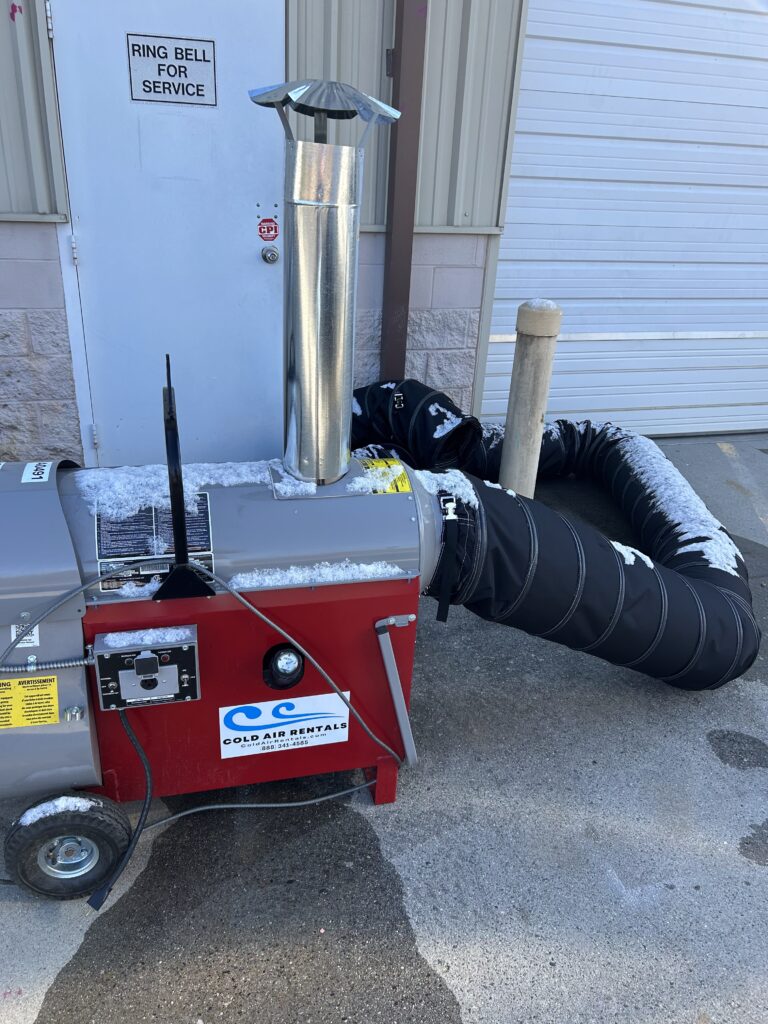 Indirect-fired heaters offer several advantages for commercial and industrial applications:
- Clean, Dry Heat: The heat exchanger separates the heated air from combustion gases, making these units suitable for many occupied spaces when properly installed and vented.
- Versatile Applications: Indirect-fired heaters can provide temporary heat for warehouses, construction sites, commercial buildings, event tents, and other large spaces.
- Temperature Control: Many models can be paired with thermostats to help maintain consistent temperatures.
- High Heat Output: Industrial indirect-fired heaters are available in high-capacity models capable of heating large commercial spaces.
- Flexible Ducting Options: Heated air can be directed to specific areas, allowing businesses to distribute warmth where it’s needed.
Potential Drawbacks of Indirect-Fired Heaters
While indirect-fired heaters are a practical solution for many commercial applications, there are a few considerations:
- Ventilation Requirements: Combustion exhaust must be properly vented outside the building or occupied area.
- Electrical Requirements: Most indirect-fired heaters require electricity to operate their fans and controls.
- Installation Considerations: Proper placement, exhaust routing, and ductwork may be necessary depending on the application.
How Do Direct-Fired Heaters Work?
Direct-fired heaters operate differently. Instead of separating combustion from the heated air, these units pass air directly through the combustion flame. The resulting heated air is then discharged into the surrounding space.
Direct-fired heaters are known for their high thermal efficiency because nearly all the heat generated by combustion is delivered directly into the air stream.
However, this process also means that combustion gases and moisture enter the heated space. As a result, direct-fired heaters require appropriate ventilation and are generally intended for outdoor or well-ventilated applications where their use is permitted.
Direct-Fired vs. Indirect-Fired Heaters: Key Differences

The biggest difference between these two heating systems is how they handle combustion gases.
- Direct-fired heaters: Combustion takes place directly in the airflow, meaning combustion byproducts and moisture are introduced into the heated space.
- Indirect-fired heaters: Combustion takes place in a separate chamber, and exhaust gases are vented outside while clean heated air is delivered into the space.
Although direct-fired heaters can be an efficient option for certain outdoor and well-ventilated applications, indirect-fired heaters are often a better fit for commercial environments where clean, dry heated air is important.
Where Are Indirect-Fired Heaters Used?
Indirect-fired heaters are versatile enough to support a variety of commercial and industrial heating needs. Common applications include:
Warehouses and Distribution Centers
Large warehouses can be difficult to heat, particularly when existing HVAC systems cannot keep up with cold temperatures. Industrial indirect-fired heaters provide high-capacity heating to help maintain workable conditions.
Construction Sites
Cold weather can affect construction schedules, workers, and temperature-sensitive materials. Indirect-fired heaters can provide temporary heat for enclosed work areas, helping crews maintain productivity during winter projects.
Commercial Buildings and Retail Spaces
When a building’s heating system fails or additional heating capacity is needed, temporary indirect-fired heaters can help maintain comfortable indoor temperatures while permanent HVAC equipment is repaired.
Event Tents and Temporary Structures
Outdoor events don’t have to come to a stop when temperatures drop. Indirect-fired heaters can be positioned outside a tent or temporary structure, with ductwork delivering warm air inside.
Industrial and Manufacturing Facilities
Manufacturing environments may require supplemental heat to maintain working conditions or support specific processes. Indirect-fired heaters offer a flexible solution for temporary heating requirements.
Choosing the Right Temporary Heater for Your Business
The right heating equipment depends on several factors, including your space size, required heat output, available fuel and electrical connections, and whether the area is occupied.
When evaluating temporary heating options, consider:
- Space size: The square footage and ceiling height of your building will help determine the heating capacity needed.
- Temperature requirements: Consider the current indoor temperature and how much you need to raise it.
- Insulation and airflow: Poorly insulated buildings and spaces with significant air exchange may require additional heating capacity.
- Ventilation: The type of heater you select must be appropriate for the space and its ventilation conditions.
- Fuel and power availability: Make sure your location can accommodate the heater’s fuel and electrical requirements.
Not sure what size heater you need? The team at Cold Air Rentals can help assess your application and recommend an appropriate temporary heating solution.
Commercial Heater Rentals from Cold Air Rentals
Whether you’re dealing with an unexpected HVAC breakdown, preparing a construction site for winter, or looking for supplemental heat for a large commercial space, Cold Air Rentals has temporary heating solutions to help.
Our rental inventory includes industrial indirect-fired heaters, electric heaters, and portable HVAC units with heat pump capabilities. We can help you determine which equipment best fits your application, arrange delivery, and assist with installation.
We serve commercial and industrial customers throughout Charlotte, Raleigh, Durham, and surrounding areas.
Need temporary heating for your business? Contact Cold Air Rentals to discuss your project and request a quote.
